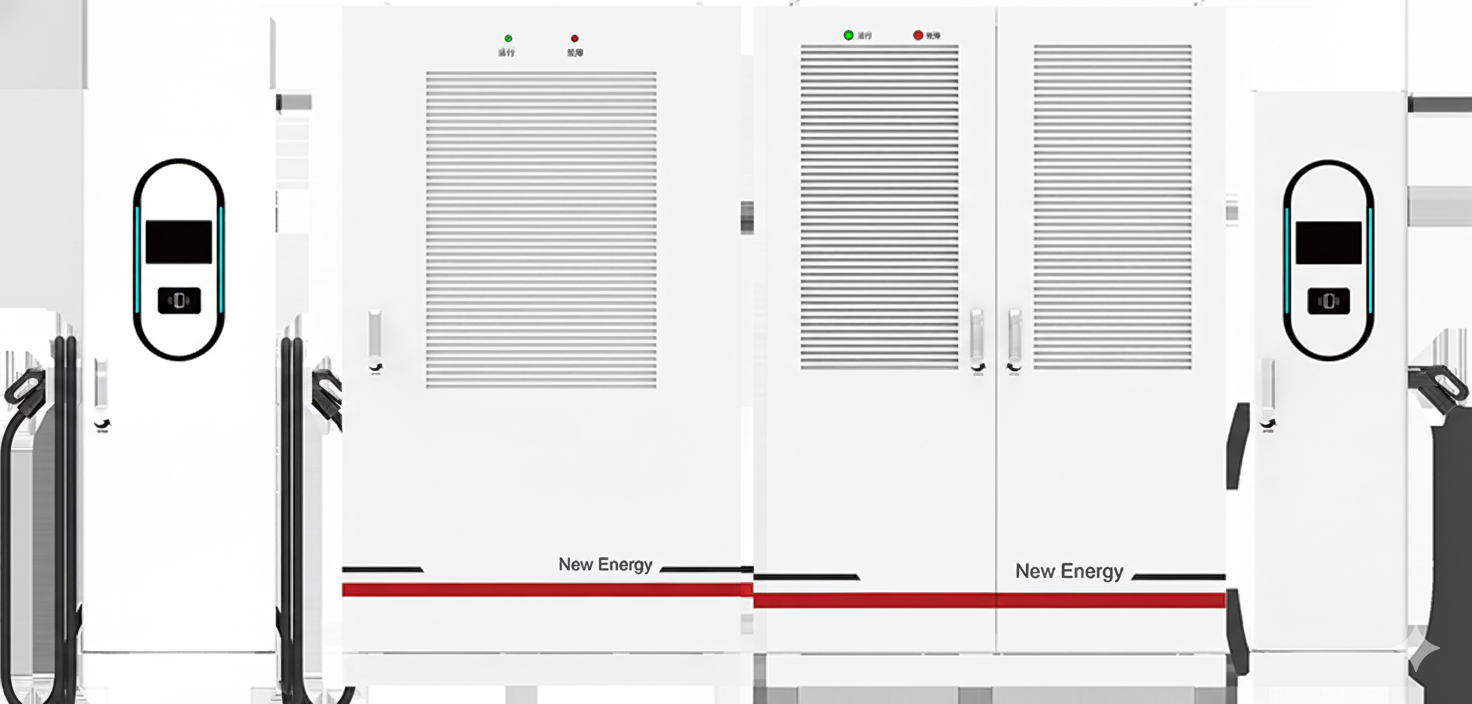



Energy Storage Commissioning Specifications And Standards -- Commercial & Industrial All-In-One Bess Guide
Comprehensive Guide to Energy Storage Commissioning Specifications and Standards for Commercial & Industrial BESS Projects
Executive Summary: Commercial and industrial BESS (Battery Energy Storage System) commissioning must be grounded in compliance with UL 9540, IEC 62619, UN 38.3, NFPA 855, and related standards to ensure safety, operability, and site code approval. This guide clarifies key specification, compliance, and integration requirements for buyers preparing RFQs and selecting credible suppliers.
Introduction:
Battery energy storage is now a critical component for commercial and industrial facilities managing demand charges, backup power, and integrating renewables. However, specifying and commissioning a compliant, integrated BESS demands far more than simply picking a battery container. Decision-makers must navigate an evolving landscape of product standards, local codes, and interoperability requirements across PCS, EMS, and fire protection—each directly affecting ROI and planning certainty. This technical guide demystifies what to require and verify at each stage of BESS commissioning, letting buyers and EPCs avoid costly delays or compliance gaps when choosing and deploying energy storage at scale.
Featured Snippet:
Energy storage commissioning specifications and standards require BESS projects to adhere to safety frameworks such as UL 9540, UL 9540A, IEC 62619, UN 38.3, and NFPA 855, ensuring safe integration, reliable performance, and code compliance for commercial and industrial installations.
Understanding Core Commissioning Standards
Technical Specifications: What Must Be Documented?
Engineering and Integration Considerations
Application Scenarios: Sector-Specific Examples
Advantages of Rigorous Commissioning Specifications
Limitations and Trade-Offs
Buyer’s Selection Guide: Choosing a BESS Supplier
Maintenance and Ongoing Compliance
Frequently Asked Questions
Conclusion: Next Steps Toward a Compliant BESS Project
Understanding Core Commissioning Standards
Any commercial BESS project must anchor its specification and commissioning plan in established industry standards—both to reduce risk and to meet permitting authority requirements. Two central safety frameworks dominate the current regulatory landscape:
UL 9540: The leading North American energy storage system safety standard, covering system integration, construction, and operation. It includes requirements for battery management, thermal environment, and interoperability between subsystems.
UL 9540A: Defines thermal runaway fire propagation test methods for battery systems/modules/packs, a key reference for fire protection planning and code compliance.
Parallel international standards matter for export or multi-market builds:
IEC 62619: Governs safety requirements for lithium-ion cells and batteries for industrial applications (including stationary storage).
IEC 62933: Addresses system-level requirements for stationary energy storage.
UN 38.3: Mandates battery shipping/transport safety; essential for international logistics and supply chain movements.
NFPA 855: Defines installation and code minimums for stationary energy storage; local authorities often add overlay requirements aligned with this U.S. standard.
CE marking: Essential for access to EU markets, referencing compliance with EU directives on safety, EMC, and environmental health.
Each standard impacts what must be specified from the outset and which documentation the supplier is required to provide at submittal and commissioning acceptance.
Technical Specifications: What Must Be Documented?
Core System Specification Items
Ensuring a robust BESS commissioning process starts with a concrete, detailed specification. The following must be required (and then verified) for each commercial/industrial project:
Battery Chemistry & Cell Certifications: Document battery type (e.g., LFP, NMC), manufacturer, and evidence of UL/IEC certification at the cell/module/pack level.
System Safety Requisites: Explicit requirement for UL 9540 or IEC 62933 tested system design; specify required evidence (test reports, certificates) with submittals.
Thermal Management & Fire Mitigation: Description of fire suppression method, ventilation, and thermal runaway containment, with reference to UL 9540A or equivalent test data.
PCS (Power Conversion System): Define interface voltage, allowable current limits, supported grid forms (IEC or UL listed as applicable), and control signal protocols.
BMS/EMS Integration: Data communication protocols, cyber security requirements, and required system-level interoperability testing between vendor-supplied controls and site SCADA or EMS.
Enclosure Ratings & Environmental Tolerance: Specify ingress protection (IP/NEMA), operating temperature range, seismic and wind requirements, ventilation code references.
Warranty Scope: Clearly define minimum system, battery, and container warranties, including performance and safety coverage.
Key Documentation Requirements
For compliance and commissioning, require suppliers to deliver:
UL 9540/IEC 62933/IEC 62619 certificates and test reports
BOMs with traceable model/serial numbers
Factory acceptance test (FAT) protocols
Integration and fire safety diagrams
Emergency response plans referencing NFPA 855/local code
Engineering and Integration Considerations
Materials and Assembly
Commercial BESS typically use steel or aluminum for enclosure design, with internal battery racks fitted for fast swap/replacement access. Cable management and busbar specifications must account for peak load and expected fault current, with insulation and ratings matching the application (indoor, outdoor, seismic, etc.). All battery modules should be independently monitored and fused, limiting propagation of faults.
Integration Constraints
System architecture commonly includes PCS, BMS, and EMS as distinct yet tightly integrated modules. Each must use well-documented, industry-standard communications (MODBUS, IEC 61850, OPC UA) with robust handshakes. Compatibility with local grid codes and metering authorities is necessary for interconnection—especially in ISO or utility-controlled service territories. Fire suppression system integration should reference UL-listed components, and functional testing at site acceptance must confirm actual system response to alarms and emergency signals.
Standards-Driven Interoperability
Adhering to standards like UL 9540 ensures both the hardware and software of the BESS are designed to operate safely, but also that all interfaces—such as external disconnects, metering, and network points—are functional and secure. Detailed FATs must verify this interoperability before shipment and again during site commissioning.
Application Scenarios: Sector-Specific Examples
Factory Peak Shaving: A 2-5 MWh containerized BESS, tested to UL 9540, can cut peak demand charges in a manufacturing facility, running integrated with a central EMS and responding instantly to utility pricing signals.
Data Center Backup: BESS deployed to augment or replace diesel generators, with NFPA 855-compliant fire systems and IEC 62933-tested performance for fast, black-start capabilities.
Renewables Firming at Warehouses: Solar-integrated storage meeting local fire code overlays, designed for rapid interconnection and safe power export under UL 9540/IEC 62619 documentation.
Hospital Microgrids: Including BESS as a critical islanding resource: design and commissioning must prioritize both NFPA 855 siting constraints and comprehensive EMS-to-building-automation integration.
Advantages of Rigorous Commissioning Specifications
Reduced Permitting Risk: Submittals aligned with UL, IEC, and local fire regulations speed up plan checks and lower risk of change orders or rejections.
Operational Reliability: Documented interface and performance criteria accelerate site acceptance and handover.
Warranty Certainty: Detailed, standards-based specifications clarify warranty triggers and coverage boundaries, supporting finance and insurance needs.
Future-Proofing: Insisting on interoperable protocols and up-to-date safety documentation enables future upgrades with minimal re-commissioning effort.
Limitations and Trade-Offs
Upfront Engineering Cost: Commissioning to strict standards often means higher engineering and documentation costs at the procurement stage.
Supplier Shortlist Shrinks: Insisting on full UL 9540/IEC 62619 traceability narrows the field of eligible vendors, especially for newer chemistries or custom integrations.
Project Timeline Impacts: Third-party certification and additional on-site FATs can lengthen project delivery compared to off-the-shelf or pre-certified products.
Documentation Overhead: More paperwork means more diligent project management—falling short exposes the buyer/EPC to permit or utility approval delays.
Buyer’s Selection Guide: Choosing a BESS Supplier
Selecting a BESS integrator or OEM is not just about lowest price or quoted kWh. Evaluate:
Traceable Certification: Require valid certificates (not just claims) for UL 9540, IEC 62619, relevant fire code documentation; beware of non-specific or expired documentation.
Application Experience: Request references and site photos of similar commissioned projects, especially in your jurisdiction or industry.
Integration Support: Assess willingness and capacity for on-site FATs, custom EMS/BMS/PCS programming, and support for owner’s systems.
Clear Warranty Terms: Scrutinize warranty language for exclusion clauses or ambiguous responsibilities.
Service and Spare Parts: Review response times and local partner networks for urgent support, especially for fire/safety system resets or battery module replacements.
Attach these requirements to the RFQ and enforce at submittal/QC stages to avoid late-stage surprises.
Maintenance and Ongoing Compliance
BESS commissioning sets the standard for ongoing inspection and maintenance. Annual or semiannual checks must verify continued compliance with NFPA 855, local code for fire/safety, and battery/BMS health. Suppliers should provide maintenance manuals referencing the original standards used at commissioning. Batteries shipped for replacement must meet UN 38.3, and any upgrades must not invalidate the existing UL 9540 or IEC certificates.
Periodic system-level tests—such as functional fire suppression drills, PCS relay checks, and communications failover—should be scheduled and logged as part of site safety compliance files, especially where local authorities may inspect post-commissioning.
Frequently Asked Questions
How do I choose a BESS supplier for a factory?
Evaluate BESS suppliers based on documented compliance with UL 9540 (or IEC 62619 for international projects), clear test certificates, proven experience with industrial installations similar to yours, integration support for your specific EMS/PCS, and transparent warranty/service terms. RFQs should demand evidence of certifications and require supplier involvement throughout installation and commissioning.
What commissioning documentation is absolutely necessary?
Require a complete set of UL 9540/IEC 62619 test reports and certificates, fire safety and thermal runaway test evidence (UL 9540A data), as-built system diagrams, network and integration test records, and detailed O&M manuals cross-referenced to standards. Do not accept generic declarations or unstamped documentation.
Which local codes must be addressed in addition to UL and IEC standards?
NFPA 855 is the U.S. reference for installation, spacing, and fire mitigation, but local authority requirements may be stricter—especially for means of egress, ventilation, signage, and hazardous location designations. Always cross-check jurisdictional overlays before finalizing design or ordering equipment.
How does UN 38.3 affect system procurement and commissioning?
UN 38.3 governs the safe transport of lithium batteries/modules. Ensure your supplier provides valid UN 38.3 test reports for all battery shipments—failure to comply can cause shipping delays or even confiscation at borders. Retain copies for all logistics and warranty spares movements.
If my site needs to change the EMS or BMS after installation, do standards require re-certification?
Major upgrades or changes to system-level controls—BMS, EMS, or PCS—can impact the original certification (UL 9540/IEC 62933). Any alterations should be re-evaluated with the supplier and local authority. In many cases, a retest or new documentation package is necessary to maintain compliance and warranty validity.
Conclusion: Next Steps Toward a Compliant BESS Project
Successful energy storage commissioning starts by embedding UL, IEC, UN, and NFPA requirements into project specification, supplier selection, documentation review, and integration testing. Equip your procurement or engineering team with a standards-based checklist, insist on real test documentation, and work with suppliers who not only sell equipment but understand their roles in site acceptance, compliance, and post-handover support. For expert guidance tailored to your project and jurisdiction, reach out directly to GS PowerTech’s engineering team.