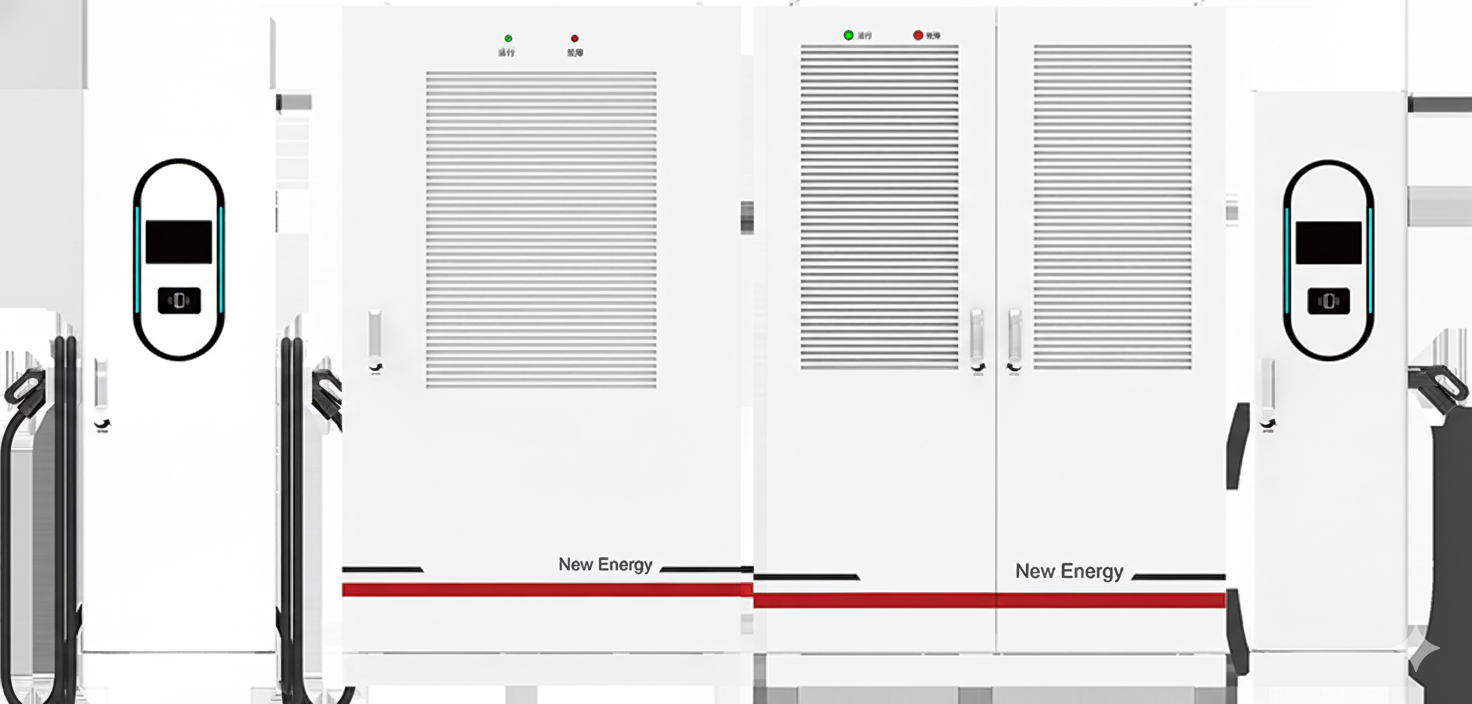


Custom All In One Energy Storage System Solutions -- Commercial & Industrial All-In-One Bess Guide
Custom All-in-One Energy Storage System Solutions: The Definitive Commercial & Industrial BESS Guide
Executive Summary: Custom all-in-one energy storage system solutions integrate batteries, PCS, BMS, EMS, cooling, and fire protection into a single enclosure, purpose-designed for commercial and industrial energy management. Selecting and sizing such a BESS demands data-driven engineering, compliance with safety standards like UL 9540 and IEC 62619, and a clear understanding of application-specific requirements—including tariff modeling, critical load support, and site integration.
Introduction: For commercial and industrial facilities facing tightening energy cost structures, reliability demands, and complex regulatory expectations, the practical deployment of battery energy storage has become a strategic imperative. Yet, engineering the optimal system—balancing real-world load profiles, site constraints, power quality expectations, and compliance—remains technically complex. All-in-one BESS solutions promise integration and swifter deployment, but specifying one for a real application requires deep understanding—of both the technology and the context. This guide delivers that clarity: precise, technically grounded, and aligned to the decisions an energy buyer or project engineer must make.
Featured Snippet: Custom all-in-one energy storage system solutions for commercial and industrial users package batteries, PCS, BMS, EMS, thermal management, and fire protection in a single enclosure. These systems are engineered to match site-specific load profiles and compliance needs, enabling peak shaving, load shifting, and backup power with simplified integration and robust safety features.
Understanding Commercial & Industrial All-in-One BESS
Core Applications: Real-World Energy Management Scenarios
System Engineering: Technical Building Blocks and Integration
Compliance & Standards: Navigating Safety and Regulatory Frameworks
Advantages of Custom All-In-One BESS Solutions
Trade-Offs and Limitations
Selection Guide: Specifying Your Ideal System
Lifecycle & Maintenance Considerations
Frequently Asked Questions
Conclusion
Understanding Commercial & Industrial All-in-One BESS
Integrated all-in-one battery energy storage systems (BESS) consolidate the major functional blocks of energy storage—battery modules, power conversion system (PCS), battery management system (BMS), energy management system (EMS), thermal management, and fire protection—into a single, engineered enclosure. By combining all these elements, all-in-one BESS minimize site-level integration risk and reduce installation timelines for commercial and industrial deployments.
Unlike separately housed “best-of-breed” subsystem approaches, a factory-integrated unit ensures that thermal interfaces, safety interlocks, communication protocols, and compliance measures have been validated as a system, not just a sum of parts. For applications ranging from factory peak shaving to critical backup for data centers, this means streamlined specification, more predictable commissioning, and a single line of accountability for warranties.
Core Applications: Real-World Energy Management Scenarios
Factory Peak Shaving & Demand Charge Management
Manufacturing plants often experience high demand charges from short but expensive peak loads. All-in-one BESS, coordinated by EMS algorithms, can discharge precisely when grid load spikes, flattening peaks and cutting costs without impacting operations.
Load Shifting on Time-of-Use Tariffs
Many commercial buildings, especially in Europe, Australia, or parts of North America, pay dramatically higher rates during certain hours. By storing electricity during low-cost periods and discharging when tariffs rise, a BESS directly addresses tariff arbitrage—automatically managed by the EMS for optimal financial return.
Backup Power for Critical Loads
Data centers, hospitals, and mining operations depend on uninterrupted power. Custom all-in-one BESS solutions provide seamless transition to backup during grid outages, protecting sensitive loads and avoiding costly downtime. System integration ensures the PCS (often bi-directional) can seamlessly switch between grid-tied and islanded modes.
PV Self-Consumption Optimization
Sites with on-site photovoltaics can store excess solar generation and use it later to reduce grid draw. An all-in-one BESS, with EMS integration, schedules charging and discharging based on solar output, consumption patterns, and grid pricing—maximizing self-consumption and minimizing export losses.
System Engineering: Technical Building Blocks and Integration
Battery Modules
Commercial and industrial BESS rely primarily on lithium-ion chemistry—usually LFP or NMC cells—configured for the required voltage and capacity (kWh). Engineering focus areas here include cell-level current handling, thermal management, and compliance with IEC 62619 safety standards; cell selection also drives transport compliance (UN 38.3).
Power Conversion System (PCS)
The PCS is the bridge between AC (site/grid) and DC (batteries). Its rating (in kW or MW) must match both the maximum expected site power swing and any grid interconnection limits. PCS size also affects available backup capability—limiting total discharge or charge rate. Proper integration ensures fast transfer to islanded mode when needed, as well as harmonic mitigation.
Battery Management System (BMS)
The BMS monitors voltage, current, and temperature at the module and pack level—balancing cells and flagging unsafe conditions. Integrated, system-level BMS designs (per IEC 62933) communicate state of health to the EMS and may directly trigger safety cutouts or fire suppression actions.
Energy Management System (EMS)
The EMS manages overall energy flows—discharging, charging, switching modes—using real-time data from meters, tariffs, and solar forecasts. Modern all-in-one BESS offer programmable EMS logic, remote monitoring, and API integration with building management or SCADA systems.
Thermal Management
Thermal strategy is pivotal for battery life and safety. Commercial BESS enclosures use either forced air (suitable for mild climates or lower-density systems) or liquid cooling (necessary for high-density, high-power, or harsh environments). The cooling approach must sustain cell temperatures within manufacturer-specified bands, with redundancy for critical sites.
Fire Detection and Suppression
Integrated fire detection (using smoke/gas sensors) and suppression (typically clean-agent or aerosol-based) is included in all-in-one enclosures. Design follows guidance from UL 9540A and local fire codes (like NFPA 855 in the US). Rapid response is critical to mitigate thermal runaway risks unique to large-format lithium-ion battery arrays.
Compliance & Standards: Navigating Safety and Regulatory Frameworks
UL 9540 / UL 9540A: Recognized US safety standard and thermal runaway test method for energy storage systems. Many AHJs require adherence for permitting.
IEC 62619 / IEC 62933: International cell and system safety standards (widely referenced for European/Australian compliance).
UN 38.3: Required transport safety testing for lithium batteries (cells and packs).
NFPA 855: US fire code relevant to ESS siting, deferred to by local fire marshals and building inspectors.
CE Marking: Framework for market access in Europe, encompassing electrical and safety conformity.
Site-specific permitting may also reference ICC, local fire code amendments, and utility interconnection standards. Early engagement with compliance engineering ensures no late-stage project blockages and full traceability of system documentation.
Advantages of Custom All-In-One BESS Solutions
Single-Source Integration: All components validated together, minimizing field-level integration risk and simplifying warranty administration.
Accelerated Deployment: Factory pre-tested enclosures shrink on-site build and commissioning timelines.
Footprint Optimization: Denser packaging, suited to commercial/industrial real estate where space is a constraint.
Full Scope Fire and Safety Engineering: Coordinated detection, thermal management, and suppression, designed to system-level standards.
Programmable EMS: Advanced control modes for real-time tariff or load-following integration.
Trade-Offs and Limitations
Reduced Customization at Subsystem Level: "All-in-one" may limit some choices in battery chemistry, vendors, or third-party component brands compared to custom-assembled solutions.
Thermal Management Bound by Enclosure Constraints: Upgrading air to liquid cooling post-deployment is rarely practical—choice must be made at purchase.
Physical Transport and Installation: Large integrated enclosures require appropriate delivery access and craneage; retrofits to older buildings may be constrained.
Site-Specific Compliance Gaps: Non-standard local codes may still require custom documentation or slight modifications—factory-standard certifications do not guarantee permit approval everywhere.
Selection Guide: Specifying Your Ideal System
1. Understand Your Load and Tariff Profile
Accurate load data (interval or 15-minute granularity), historical peak demand, and relevant tariff details (energy, demand charges, time-of-use rates) are foundational. The BESS OEM will use this to model cycles, optimally size battery capacity (kWh), and PCS power (kW).
2. Power-to-Energy Ratio (kW/kWh)
Some applications require high power for short bursts (e.g., peak shaving), others need sustained energy for longer durations (e.g., backup, load shifting). Specify both maximum instantaneous power and desired backup duration to guide sizing.
3. Cooling Strategy: Air or Liquid
Air-cooled enclosures are suitable for temperate climates or lower duty cycles; liquid-cooled systems excel under high power density, elevated ambient temperatures, or 24/7 cycling. Discuss operating environment and duty cycle profile with the OEM.
4. Backup vs. Grid-Tied Operation
If the system must provide true backup or critical load isolation, ensure the PCS and EMS support grid-forming/inverter islanding modes, and size the output accordingly.
5. Integration and Warranty Scope
Request clear documentation on what is warranted (battery life, PCS electronics, EMS functionality), for what duration, and under which operating profiles. Integrated BESS typically offer consolidated warranty and service support.
6. Compliance Alignment
Verify system-level compliance with the regional requirements: UL 9540 for North America, IEC/CE for Europe/Australia. Request accessible compliance test reports. Ensure the supplier will support local permitting queries.
Lifecycle & Maintenance Considerations
While all-in-one BESS minimize daily maintenance, they are still industrial assets. Regular manufacturer-prescribed inspections are necessary: checking air filters or coolant levels (depending on cooling method), verifying fire system status, ensuring firmware is up to date, and performing periodic cell balancing or health checks (via BMS data). Many suppliers offer remote diagnostics packages; ensure your service plan includes 24/7 support, on-site response protocols, and a clear escalation pathway for warranty claims. Environmental monitoring (for dust, temperature, humidity) is essential in more challenging industrial settings.
Frequently Asked Questions
What data does a BESS manufacturer need to size a system?
Manufacturers require detailed interval load data (ideally at 15-minute intervals for 1-2 years), current energy tariffs (showing TOU/demand rates), a description of critical vs. non-critical loads for backup sizing, site layout/footprint constraints, and any available solar/wind generation information. An accurate site one-line diagram and details on grid interconnection (transformer size, protection schemes) also support optimal system design.
How do I choose between air-cooled and liquid-cooled BESS?
Air-cooled systems suit moderate climates, smaller (sub-MWh) installations, and lower cycling rates. For hot climates, dense installations (e.g., >1MW/MWh per container), or applications with frequent, deep cycling (24/7 peak/off-peak operation), liquid cooling offers better thermal control, longer battery life, and potentially higher safety margins. Always match the cooling approach to your site's environment and operational intensity.
Can an all-in-one BESS be expanded later?
Some all-in-one BESS can be paralleled for capacity or power increases, but internal expansion (adding cells to an existing enclosure) is typically limited. Plan for future scalability—if needed—during the initial specification, and confirm with the manufacturer whether parallel interconnection and system EMS coordination are supported.
How is system compliance documented for permitting?
The supplier should provide compliance certificates or reports referencing standards like UL 9540/9540A (US), IEC 62619/62933, and documentation of fire/electrical conformity for the region. Most AHJs require documented test results and detailed installation manuals; early submission facilitates permitting and inspection.
Conclusion
Custom all-in-one BESS solutions deliver proven value in commercial and industrial settings by simplifying engineering, accelerating deployment, and improving operational predictability—but true success hinges on alignment with site-specific data and compliance requirements. For tailored guidance and a system scope matched to your facility's load profile and operational objectives, contact GS Powertech’s engineering team to start the quotation and due diligence process.