

Backup Power For Commercial Buildings Guide -- Commercial & Industrial All-In-One Bess Guide
Backup Power for Commercial & Industrial Buildings: The All-In-One BESS Guide
Executive Summary: Integrated commercial and industrial All-In-One Battery Energy Storage Systems (BESS) deliver reliable backup power, grid services, and tariff optimization for business-critical sites. Proper system selection depends on detailed load analysis, site safety needs, and conformity to standards such as UL 9540, IEC 62619, and local code.
Modern commercial and industrial operations face daunting energy reliability and cost challenges. Fluctuating grid stability, ever-changing tariffs, and stringent uptime requirements—especially for sectors like manufacturing, data centers, and hospitals—demand comprehensive backup power strategies. All-in-One BESS products offer a unified solution, incorporating batteries, power conversion, system management, and protection into a single engineered enclosure. This guide outlines the technical considerations and key selection criteria for professionals looking to specify backup energy storage that meets their operational and compliance requirements.
Featured Snippet: To select backup power for commercial buildings, decision makers should analyze their load and tariff profiles, choose a properly sized all-in-one BESS, ensure compliance with standards like UL 9540 and NFPA 855, and consider site-specific factors including cooling type, fire protection, and integration with facility controls.
Key System Components and Technical Architecture
Engineering Considerations for C&I All-In-One BESS
Application Scenarios Across Industries
Advantages of Integrated BESS Solutions
Limitations and Trade-Offs
Buyer’s Selection Guide: Criteria and Comparisons
Maintenance Requirements and Lifecycle Management
Frequently Asked Questions
Conclusion
Key System Components and Technical Architecture
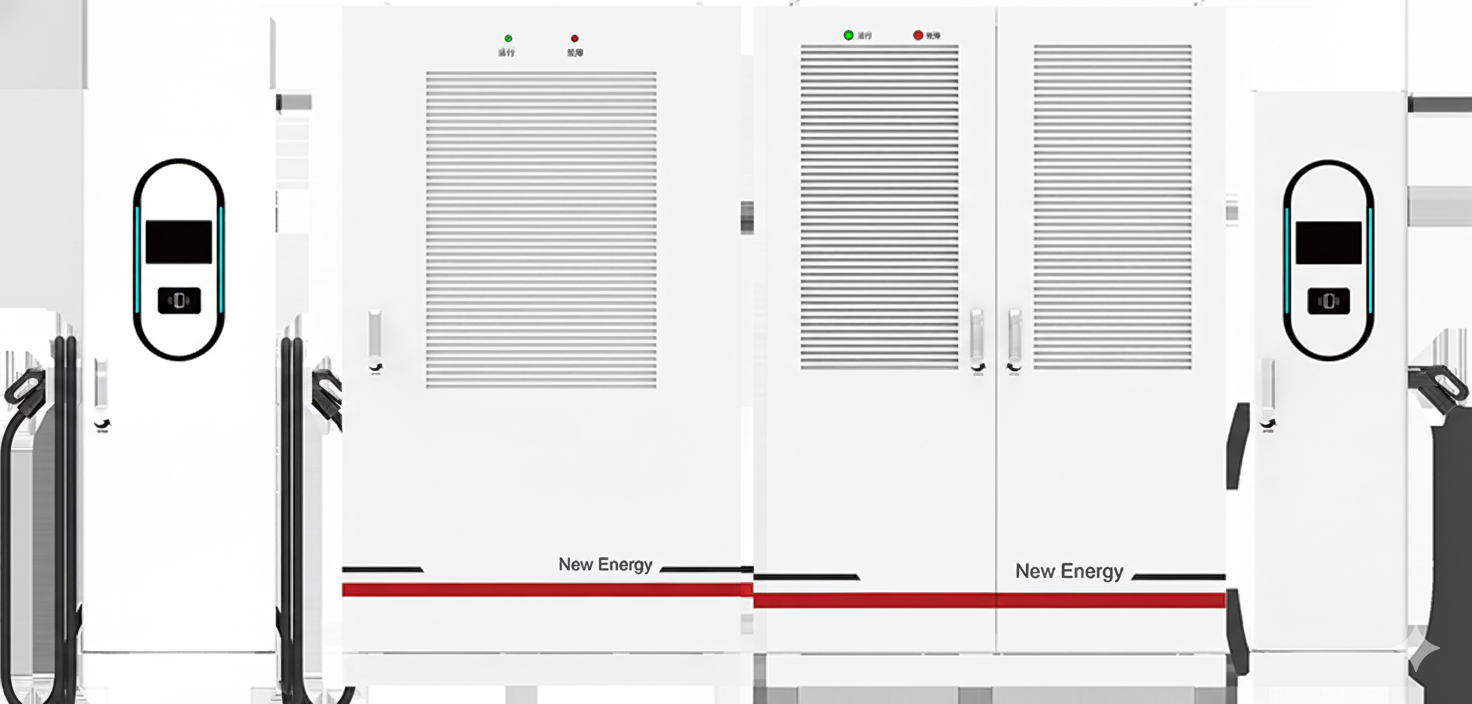
All-In-One commercial and industrial BESS units integrate a suite of crucial subsystems within a single enclosure, streamlining procurement, commissioning, and support. The primary building blocks include:
Battery Modules: Typically lithium-ion, conforming to cell-level safety standards such as IEC 62619, offering scalable energy capacities for various runtime requirements.
Power Conversion System (PCS): Handles bidirectional AC/DC conversion, sized to match both site peak demand and backup output needs.
Battery Management System (BMS): Oversees cell health, balancing, and active safety interventions, providing granular monitoring data for diagnostics and warranty validation.
Energy Management System (EMS): Manages operational modes: peak shaving, load shifting, backup supply, and PV self-consumption, often interfacing with facility supervisory controls.
Thermal Management: Implements either air or liquid cooling to maintain optimal battery temperatures, directly impacting system lifespan and safety.
Fire Detection and Suppression: Deploys multilayer protection, referencing standards like UL 9540A, often with integrated inert gas or aerosol suppression for prompt incident response.
How Integration Improves Performance
By combining these subsystems in a factory-built package, the risk of integration errors decreases, rollback to a single warranty is possible, and a harmonized safety strategy—from cell to system to installation—becomes feasible. This contrasts sharply with bespoke multi-vendor builds, which tend to multiply interface points and compliance ambiguities.
Engineering Considerations for C&I All-In-One BESS
PCS Sizing and Grid Connection
Choosing the correct PCS size requires understanding both instantaneous (kW) and total (kWh) requirements. For backup, the PCS must support the critical peak load, with headroom for inrush and transient events. Grid-tied operation (including export functions or grid services) further requires compatibility with local interconnection standards—such as IEEE 1547 in North America or the corresponding AS/NZS 4777 for Australia.
Thermal Management Strategy
Battery life and UL 9540A-compliance demand precise temperature control. Air-cooled BESS are often simpler and less costly but may struggle in dense deployments or hot/variable climates. Liquid cooling enhances heat removal for large, highly-cycled systems, especially in manufacturing or data center contexts, reducing thermal gradients and enabling tighter footprint with higher energy density.
Fire Safety and Suppression
From cell to rack and enclosure, UL 9540/9540A and NFPA 855 outline best practices for containment, detection, and suppression. Quality systems deploy multi-point gas/thermal detection and rapidly-acting clean-agent suppression (e.g., inert gas or water mist), coordinated with failover and alarm functions through the BMS/EMS.
Control Modes and EMS Integration
The EMS must support seamless transitions between peak shaving, arbitrage, and standby backup—sometimes with islanding modes or black-start capability. Integration with facility SCADA or building management systems enables automated prioritization of loads, real-time status reporting, and remote diagnostics.
Standards and Regulatory Compliance
UL 9540 / UL 9540A: North American certification for complete energy storage system safety and large-scale fire/thermal propagation testing.
IEC 62619 / IEC 62933: International standards for battery cell and system safety.
UN 38.3: Required for battery module transport safety.
NFPA 855: U.S. reference for energy storage fire safety and installation siting.
CE Marking: European regulatory framework for market access, including EMC, safety, and product design compliance.
Application Scenarios Across Industries
Manufacturing: Factories with interruptible operations utilize BESS for peak shaving, demand charge management, and immediate backup during utility faults. Large process lines may require liquid-cooled systems for continuous high load and environmental control.
Data Centers: High-reliability BESS solutions address strict uptime SLAs, acting as bridge backup for generator transfer or as primary protection against utility disturbance. Integration with EMS enables fast response to grid frequency or voltage events.
Hospitals: Regulatory mandates for uninterrupted critical power make BESS an appealing supplement—or alternative—to diesel generators, providing cleaner, quieter power with advanced monitoring.
Commercial Real Estate: Shopping centers, office towers, and logistics hubs leverage BESS for utility charge optimization, backup for life safety loads, and maximized self-consumption from onsite PV.
Mining: Remote sites rely on BESS to stabilize microgrids, reduce dependence on diesel, and deliver backup over critical shift handovers or equipment operations.
Advantages of Integrated BESS Solutions
Everything in One Enclosure: Simplifies installation, commissioning, and field integration, reducing project lead times and de-conflicting multi-vendor sourcing.
Unified Safety and Compliance: Streamlined certification under cohesive test standards (UL 9540/9540A, IEC 62619) and configured for easy adherence to installation codes (NFPA 855, CE marking).
Remote Monitoring and Diagnostics: Onboard EMS platforms facilitate status monitoring, early issue detection, and performance tracking—critical for finance, warranty, and compliance reporting.
Optimized Space Utilization: Compact designs with integrated thermal management allow higher energy density for urban or space-limited sites.
Single Warranty Scope: Clear responsibility for support, performance, and product life—supporting project financing and risk management.
Limitations and Trade-Offs
Upfront Capital Cost: Although lifecycle ROI can be favorable, initial investment remains a hurdle, especially compared to minimal backup solutions like diesel-only standby or rack-level UPS.
Site Preparation Requirements: BESS installations may need reinforced bases, environmental controls, or fire buffer zones to comply with NFPA 855 or local codes.
Fixed Integration: All-in-one enclosures restrict customization compared to modular, build-your-own systems. Certain site-specific features or layouts may be limited by factory configurations.
Battery Replacement Lifecycle: Unlike rotating machines, battery systems have finite cycle and calendar lives. Accurate EMS programming and sizing are critical to prevent premature degradation.
Buyer’s Selection Guide: Criteria and Comparisons
Load and Tariff Profile Analysis
Begin with granular data: 15-minute (or finer) load profiles, historical outage records, and all relevant utility tariffs. Manufacturers require this data to accurately simulate and size BESS for both cost and backup performance—preventing undersizing (risking loss of critical load) or wasted oversizing (ballooning cost and footprint).
Power vs Energy (kW / kWh) Ratio
Your essential use case dictates whether to maximize power (for short, critical backup—think data center bridging) or energy (for extended backup—think hospitals) or find a balanced blend. PCS and battery sizing must be tuned for these priorities, including consideration of peak vs average demand.
Cooling Strategy: Air vs Liquid
Air cooling often suffices for moderate climates and sites with moderate cycling/rates. Liquid cooling is preferable for hot, high-density, or mission-critical applications, offering superior uniformity and environmental tolerance but at higher cost and complexity.
Grid-Tie vs Backup Capability
Some installations require backup only, isolated from the grid on failure. Others may pursue grid services (such as demand response or frequency regulation) for ongoing ROI. Confirm system design and local regulations allow the desired grid interaction modes, including safe transitions and controls.
Integration and Warranty Scope
Assess the ability to interface with existing site controls (Modbus, OPC-UA, BACnet, etc.), remote monitoring protocols, and preventive maintenance schedules. A comprehensive warranty covering all key components—batteries, PCS, EMS, BMS—reduces project risk.
Maintenance Requirements and Lifecycle Management
All-In-One BESS reduce maintenance headaches by centralizing diagnostics and standardizing routine service intervals. Nevertheless, regular inspections of battery modules, air/liquid filters, fire suppression systems, and EMS logs are essential. Many commercial systems offer predictive maintenance analytics based on continuous BMS/EMS monitoring, supporting uptime guarantees and warranty fulfillment. Component-level thermal checks and firmware updates should be scheduled per manufacturer and regulatory guidelines.
Frequently Asked Questions
What data does a BESS manufacturer need to size a system properly?
Manufacturers require at least 12 months of 15-minute (or finer) facility load data, clear designation of critical vs non-critical loads, current and projected utility tariff structures, available installation footprint, and any site-specific environmental constraints or local compliance requirements. This ensures both technical correctness and optimized ROI for the project.
Air-cooled vs liquid-cooled C&I BESS—how should I decide?
Air-cooled systems are well-suited for moderate loads, standard commercial environments, and budget-sensitive projects. Liquid-cooled systems excel when high energy densities, elevated ambient temperatures, or tight thermal tolerances are required—typical in data centers, manufacturing, or mining hubs. Consider future scalability and maintenance complexity when deciding.
What’s involved in achieving UL 9540 or IEC 62619 compliance?
UL 9540 certifies the entire energy storage assembly for electrical, thermal, and fire safety, typically requiring third-party testing. UL 9540A specifically evaluates fire propagation risk. IEC 62619 covers lithium cell/module safety at the international level. Installations must also adhere to site-level codes (NFPA 855, local fire and electrical regulations). Verification from the manufacturer on compliance status is critical—always obtain documentation during procurement.
How can BESS integrate with existing building management systems?
Most All-In-One BESS support standard industrial communication protocols (e.g., MODBUS, BACnet) to enable real-time data exchange with facility SCADA/BMS. This allows load prioritization, remote alarms, performance logging, and sometimes automated grid/backup mode switching when integrated properly with site controls.
Does the warranty scope typically cover all subsystems?
Integrated All-In-One BESS offerings generally include unified warranty coverage for batteries, PCS, BMS, EMS, and thermal/fire management systems—a major advantage over multi-vendor builds. However, exact durations and conditions vary; buyers should clarify cycle life limitations, annual throughput, and maintenance requirements up-front to avoid unexpected exclusions.
Conclusion
Specifying the right All-In-One BESS for commercial and industrial backup power begins with detailed load analysis, moves through rigorous technical and compliance vetting, and ends with careful attention to integration, warranty, and lifecycle service strategies. For mission-critical applications requiring high resilience, regulatory confidence, and strong financial performance, these unified storage systems provide a proven path forward. To advance your project, request a technical assessment based on your facility’s real load and tariff data from an established energy storage provider.